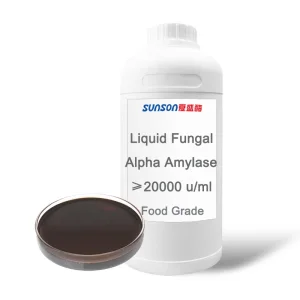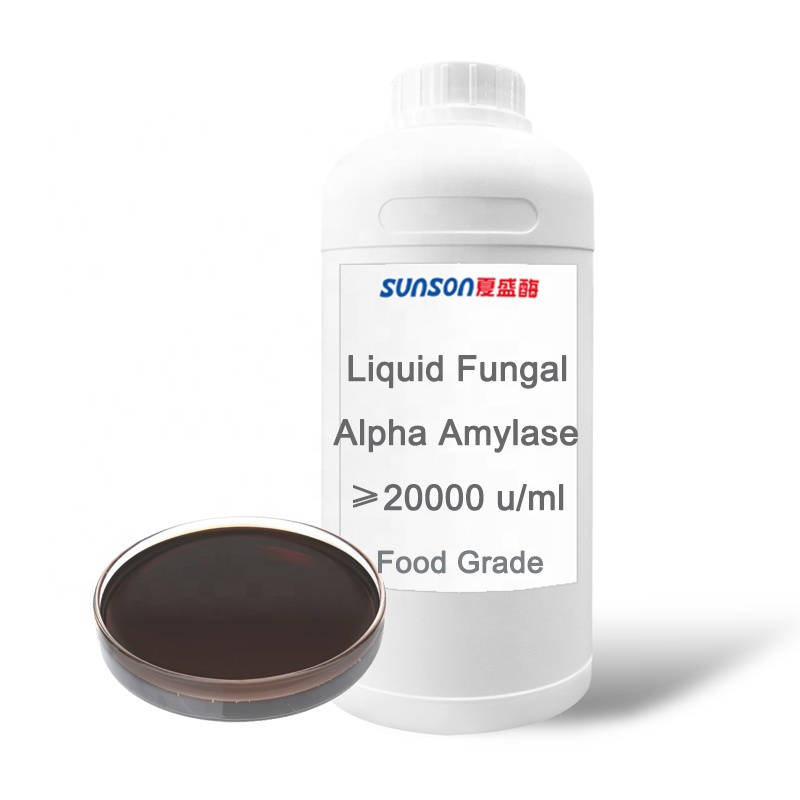
Liquid Fungal Alpha-Amylase For Baking, Beer & Maltose Syrup | From Aspergillus Oryzae | Heat-Labile Enzyme

Product Description

Liquid Fungal Alpha-Amylase for Baking, Beer & Maltose Syrup | From Aspergillus Oryzae | Heat-Labile Enzyme

Fungal Alpha-amylase is produced by submerged fermentation of Aspergillus Oryzae followed by purification and formulation. The product depolymerizes starch leading to the liquefaction of starch, viscosity reduction and contains little side activities.

Mechanism and Product Standard

Fungal Alpha-amylase is an endo type of α-amylase that hydrolyzes the α-1,4-glucosidic linkages of gelatinized starch and soluble dextrins randomly, reducing the high viscosity of the starch slurry, giving rise to oligosaccharides and a small amount of dextrin.

Reaction Parameters
Condition Range
Optimum Temperature 50°C - 65°C
Optimum pH 4.5 - 6.0
Activator Ca²⁺ exhibits a certain activating effect.
Inhibitor Fe²⁺, Ba²⁺, Cu²⁺, Mn²⁺, and Fe³⁺ show strong inhibitory effects.
Application Recommendations
Enables rapid starch liquefaction with low color development, shortens gelatinization time, and improves equipment and raw material utilization.
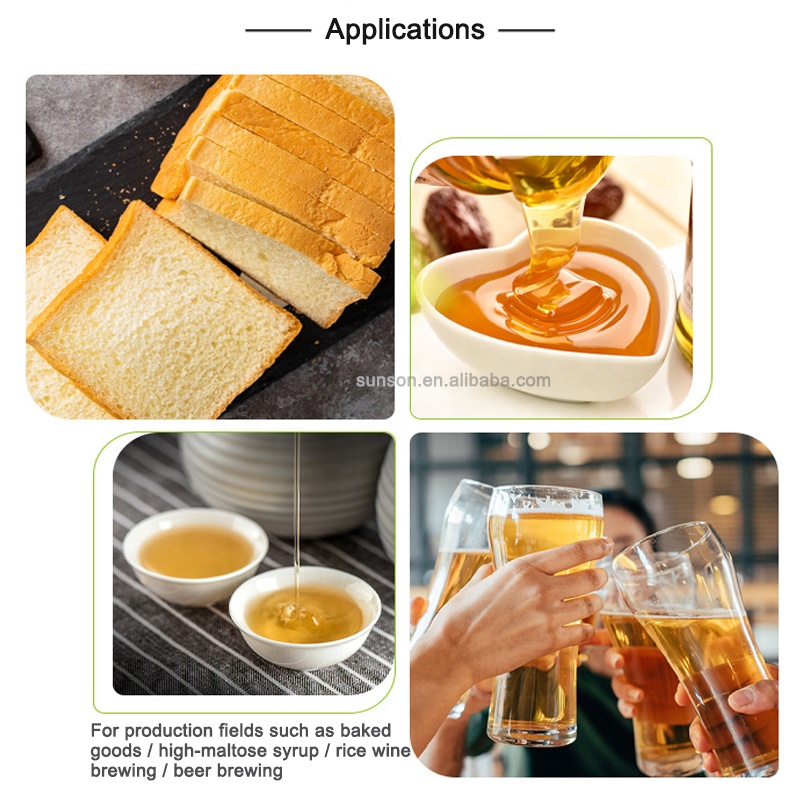
Baked Goods Application: As the neutral fungal alpha-amylase is heat-labile, it is easily inactivated by heating during dough fermentation. This facilitates control over fermentation speed and extent, preventing excessive dextrin production (which causes sticky crumb) due to prolonged action.
Recommended Dosage Details
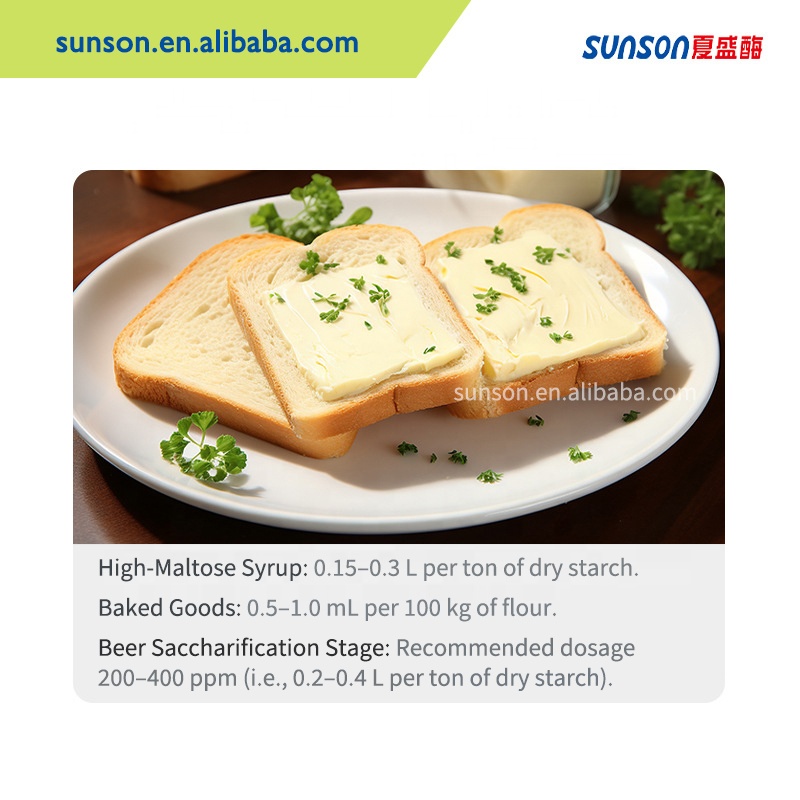
High-Maltose Syrup: 0.15–0.3 L per ton of dry starch.
Baked Goods: 0.5–1.0 mL per 100 kg of flour.
Beer Saccharification Stage: 200–400 ppm (i.e., 0.2–0.4 L per ton of dry starch).
*Note: Due to variations in saccharification raw material composition and process parameters, the optimal dosage should be determined through testing. If pH adjustment of the feedstock is required, add the enzyme solution after adjustment is complete.
Inactivation Conditions: 100°C for 20 minutes.
Product Standard (Complies with GB1886.174)
No. Items Index
1 Bulk density / (g/ml) 1.10 - 1.25
2 pH / (25°C) 5.0 – 6.8
3 Lead / (mg/kg) ≤ 5.0
4 Arsenic / (mg/kg) ≤ 3.0
5 Total viable count / (CFU/mL) ≤ 50000
6 Coliform Bacteria / (CFU/mL) ≤ 30
7 Escherichia coli < 10 CFU/mL or ≤ 3.0 MPN/mL
8 Salmonella / (25mL) Not Detected
Safety & Handling Precautions

Enzyme preparations are proteins. Inhalation of dust or airborne particles may cause sensitization and trigger allergic reactions in individuals. Prolonged exposure to certain enzymes may irritate the skin, eyes, and mucous membranes. Splashing and vigorous agitation may generate inhalable dust. It is recommended to wear protective clothing, gloves, and eye/face protection.
Storage and Shelf Life
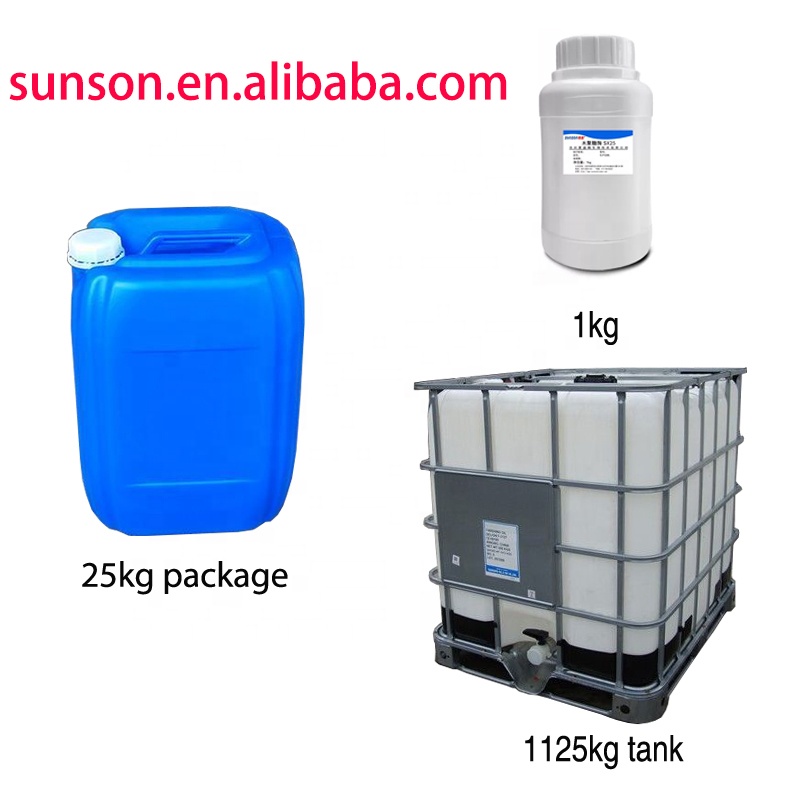
Package: 25kg/drum.
Storage: Keep sealed in a dry and cool place and avoid direct sunlight. Slight sedimentation is acceptable since it will not impact performance of the product.
Shelf life: 12 months in a dry and cool place.
Our Services & Cooperation
Inquiries replied within 12 hours
Dedication to quality, supply & service
Strict selection of raw materials
OEM / ODM Available
Reasonable, competitive prices & fast lead times
Samples available for evaluation & formulation
Fast delivery: Sample in stock; 3-7 days bulk production
Flexible shipping via major couriers or custom forwarders
Frequently Asked Questions
What is the biological source of this Fungal Alpha-Amylase?
This enzyme is produced through the submerged fermentation of Aspergillus Oryzae, followed by professional purification and formulation processes.
What are the optimal temperature and pH ranges for this enzyme?
The optimal reaction conditions are a temperature range between 50°C and 65°C, and a pH level between 4.5 and 6.0.
How does Fungal Alpha-Amylase work in baking applications?
It is heat-labile and easily inactivated during baking. This helps control the rate and extent of dough fermentation, preventing excessive dextrin production and avoiding sticky crumb texture.
What are the recommended inactivation parameters?
Complete inactivation of the enzyme can be achieved by heating it at 100°C for 20 minutes.
What is the storage standard and shelf life?
The product should be kept sealed in a cool, dry place away from direct sunlight. Under these conditions, the shelf life is 12 months.
What packaging formats are available?
The standard packaging configuration is 25kg per drum.

Related Products