Global buyers are asking a practical question: what are the latest trends in the plant protein industry? The answer extends beyond replacing meat with soy or pea isolates. Today, purchasing teams are examining taste, texture, nutrition, processing performance, traceability, and cost. They are also watching fava bean, chickpea, lentil, and rice proteins gain attention. Regional sourcing matters more than before.
Professor David Julian McClements, a food scientist at the University of Massachusetts Amherst, has said, “The future of food is going to be plant-based.” His view reflects a wider market shift, but buyers should remain careful. Growth does not guarantee quality.
The strongest developments include cleaner labels, improved protein blends, upcycled ingredients, and plant-based products designed for specific applications. Some manufacturers are using fermentation to improve flavor and reduce bitterness. Others are developing concentrates with better solubility for beverages, bakery products, and sports nutrition. However, sustainability claims still require evidence. Ask for lifecycle data, allergen controls, origin records, and independent certifications.
These seven tips are designed for real purchasing decisions. They connect laboratory innovation with factory realities, shipping conditions, and consumer expectations. A powder may perform well in a sample cup, then fail during large-scale production. That happens.
Buyers should test texture after storage, not only on delivery. They should compare protein content, amino-acid quality, functionality, and total landed cost. No single ingredient wins every application. That is an important limitation. The most reliable strategy combines technical validation, transparent suppliers, and honest evaluation of what consumers will actually eat.
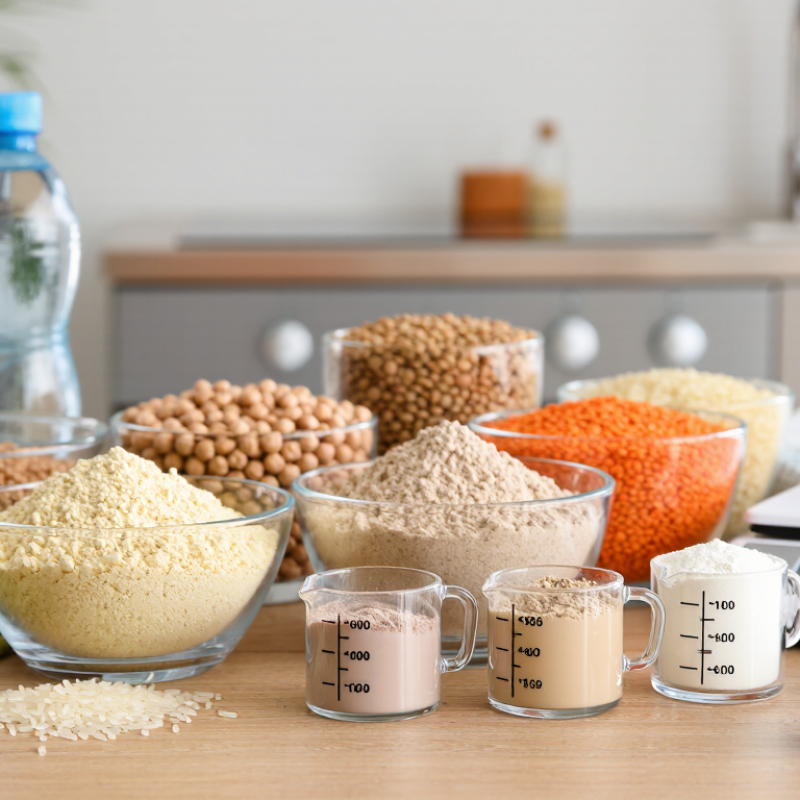
Global buyers should start with the market signal: U.S. plant-based retail sales reached $8.1 billion in 2023, according to GFI. This figure shows demand, but it does not guarantee equal growth across every category. Measure value and volume separately. A higher sales value may reflect inflation, premium pricing, or changing pack sizes.
Track protein format closely. Pea, soy, fava bean, and blended proteins serve different taste and nutrition needs. Ask suppliers for protein content, amino acid data, allergen controls, and processing details. Do not judge quality by a clean label alone. Ingredient performance matters during cooking, storage, and transport.
Price still shapes repeat purchases. Compare cost per serving, not only cost per kilogram. Test products in small regional launches before making large commitments. Local cuisines can expose texture problems quickly. A product that works in a burger may fail in a soup or noodle dish. Shelf stability also deserves careful review, especially across warm shipping routes. I have seen strong concepts lose momentum because buyers assumed consumer interest would overcome an inconvenient format. That assumption needs challenging. Keep claims precise, evidence-based, and suitable for the destination market. Demand is real. It is also uneven.
Global buyers should compare plant proteins by protein density, amino acids, and processing format. USDA FoodData Central lists about 36 grams of protein per 100 grams of dry soybeans, versus roughly 26 grams for fava beans and 25 grams for peas. These figures are useful, but not universal. Flour, concentrate, isolate, moisture, and heat treatment can change the result.
The amino-acid pattern matters more than the headline number. USDA amino-acid records show that soy, pea, and fava provide substantial lysine, which is often limited in cereals. Soy generally offers the most balanced profile. Pea and fava remain strong options, but methionine and cysteine deserve attention. FAO’s Dietary Protein Quality Evaluation report stresses that digestibility and processing affect protein quality. Buyers should request DIAAS or equivalent testing, not rely only on raw-bean data.
Seven practical checks help. Compare protein on a dry-matter basis. Review leucine levels for sports nutrition. Check sulfur amino acids in blends. Confirm allergen declarations and origin documents. Test solubility after heating. Measure flavor and color in the final formula. Recheck supplier data annually. The Good Food Institute’s 2024 industry report notes continuing interest in affordable, scalable plant proteins, but cost pressure is real. A cheaper ingredient may need more processing. That can erase its initial advantage. My cautious view: use USDA data for screening, then validate each finished product in an independent laboratory.
| Buyer Tip | Evaluation Dimension | Soy | Pea | Fava Bean | Procurement Implication |
|---|---|---|---|---|---|
| 1. Start with protein density | Protein per 100 g, mature raw seed | 36.49 g | 24.55 g | 26.12 g | Soy provides the highest native protein concentration; pea and fava may require more raw material or further concentration to reach the same protein target. |
| 2. Check the first limiting amino acid | Methionine + cystine, per 100 g raw seed | 1.20 g | 0.50 g | 0.62 g | All three legumes are relatively lower in sulfur amino acids than in total protein. Cereals or a complementary protein source may improve the overall amino-acid balance. |
| 3. Confirm lysine performance | Lysine, per 100 g raw seed | 2.71 g | 1.55 g | 1.68 g | Legume proteins generally contribute useful lysine for products that contain cereal ingredients, whose lysine content is often lower. |
| 4. Compare leucine for sports and active nutrition | Leucine, per 100 g raw seed | 3.31 g | 1.63 g | 1.79 g | Soy delivers the greatest leucine quantity per 100 g raw seed. Pea and fava formulas may need a higher protein serving or blending to achieve a comparable leucine dose. |
| 5. Specify the processing format | Typical ingredient formats | Concentrate, isolate, flour, textured protein | Concentrate, isolate, flour, textured protein | Flour, concentrate, isolate, textured protein | Do not compare raw-seed protein directly with finished ingredients. Request finished-specification data for protein percentage, moisture, ash, particle size, solubility, and dispersibility. |
| 6. Screen formulation and labeling constraints | Allergen and regulatory review | Major allergen in many markets | Legume allergen review required | Legume allergen review required | Assess allergen declarations, cross-contact controls, local novel-food rules, and suitability for the target market before approving a supply route. |
| 7. Validate sustainability with supplier-specific evidence | Origin, water, land, and carbon information | Varies by origin and farming system | Varies by origin and farming system | Varies by origin and farming system | Avoid generic sustainability rankings. Request country of origin, crop-year traceability, agricultural-practice information, and a clearly defined life-cycle methodology. |
Global buyers are watching plant protein launches more closely, especially products using fermentation or blended sources. Innova Market Insights launch tracking shows these formats moving beyond basic meat alternatives. Fermentation can soften earthy notes, improve texture, and support cleaner ingredient stories. Yet performance varies by strain, substrate, process control, and final recipe. A sample may taste smooth in the lab, then flatten after heat treatment. That gap matters.
Tip 1: Compare claims with finished-product evidence. Request pilot samples, stability data, sensory scores, and processing conditions. Do not judge a powder from its specification sheet alone.
Blends deserve equal attention. Pea, rice, fava, potato, and other proteins can balance amino acids, viscosity, color, and cost. Launch trends suggest developers combine sources to solve practical problems, not merely chase novelty. Buyers should inspect the blend ratio and declared protein basis. “High protein” can hide disappointing serving value. Check it.
Tip 2: Test the blend in your target format. A bar, ready-to-drink beverage, and extruded snack need different hydration and heat behavior. Measure sediment, firmness, aftertaste, and package stability over time.
Use launch data as a compass, not proof of demand. Regional preferences, labeling rules, and retail prices can change outcomes quickly. Practical development experience shows promising concepts can fail when flavor systems are added too late. That lesson deserves attention. Leave room for reformulation, supplier audits, and small-market trials. Reliable decisions need both trend signals and hands-on evidence.
Tip 1: Treat the FDA’s 50 g Daily Value as a label reference, not a universal personal requirement. It is based on a 2,000-calorie diet. A plant protein product may show 20 g per serving, or 40% Daily Value. Buyers should check the serving size, calories, and protein grams together. One scoop can look impressive until the serving becomes unusually large.
Tip 2: Verify every nutrition claim against laboratory results and current label rules. Ask suppliers for test methods, batch records, and certificates from qualified laboratories. Protein testing can vary with ingredients and processing. A simple spreadsheet is useful, but it is not proof. I would compare the declared value with several production batches, not one sample. This step often reveals small but meaningful differences.
Tip 3: Separate “high protein” from broader wellness language. Plant sources may differ in amino acid profiles, digestibility, fiber, and mineral content. Buyers should request evidence for claims such as complete protein or easy digestion. The FDA Daily Value helps standardize label comparisons, but it does not confirm product quality. Global markets may also apply different rules, so local regulatory review remains necessary. No checklist is perfect; careful questioning still protects the final claim.
Global buyers need more than a fashionable plant protein label. Use seven practical checks. Define the crop, processing method, origin, and protein concentration. Then compare supplier claims with FAOSTAT data on production, land use, water pressure, and food security. FAO figures provide context, not product-level proof. Keep that distinction clear.
Ask for farm-to-factory traceability, recent laboratory reports, and documented energy data. Check pesticide residues, heavy metals, allergens, microbiological risks, and unauthorized additives. For European sales, review current food safety, labeling, contaminant, and Novel Food requirements. For U.S. sales, verify applicable FDA rules, ingredient status, allergen controls, and evidence supporting safety conclusions. Requirements can change.
Do not accept “sustainable” without a measurable definition. Request a calculation boundary, reporting year, and independent verification. I have seen attractive carbon figures exclude transport or drying energy. That weakness matters. Compare like with like. Review amino acid profiles, digestibility, moisture, and batch consistency before approving a lower-cost ingredient. A small pilot batch can reveal bitterness, sediment, or unstable texture. It is not glamorous. It is useful. Finally, record every assumption in the purchasing file, including missing data and unresolved supplier questions. Reliable decisions often begin with admitting what is still unknown.
It signals strong demand, but growth differs across categories. Measure sales value and volume separately. Inflation may raise value without increasing purchases.
Ask for protein grams, amino acid profiles, allergen controls, and processing information. Pea, soy, fava bean, and blended proteins perform differently.
Compare cost per serving, not only cost per kilogram. Test a small regional launch before making a large purchase.
A product may work in a burger but fail in soup or noodles. Local cooking can reveal bitterness, sediment, or weak texture.
Review serving size, calories, and protein grams together. A large scoop can make the protein percentage look better than expected.
Request laboratory methods, batch records, and qualified test certificates. Compare several production batches, not one sample. One sample is weak evidence.
Ask for the crop origin, processing method, reporting year, and calculation boundary. Check whether transport and drying energy are included.
Review traceability, pesticide residues, heavy metals, allergens, microbiological risks, and unauthorized additives. Check current destination-market rules before approval.
Record missing data, unresolved questions, and every purchasing assumption. A pilot batch may expose problems earlier. Some uncertainty remains.
This guide helps global buyers understand what are the latest trends in the plant protein industry by combining market size, nutrition, product development, and regulatory considerations. It begins with the latest U.S. retail estimates, including approximately $8.1 billion in plant-based sales, to help companies assess demand and identify realistic growth opportunities. It then compares soy, pea, and fava proteins using publicly available protein and amino-acid data, highlighting differences in quality, functionality, allergen considerations, and application suitability.
The article also examines fermentation and blended protein systems through recent product-launch patterns, showing how manufacturers are improving taste, texture, digestibility, and nutritional balance. Buyers are encouraged to verify protein claims against the FDA reference value of 50 grams per day and to evaluate sustainability statements using relevant international, European, and U.S. data. Together, these steps provide a practical framework for sourcing compliant, nutritious, and environmentally responsible plant-protein ingredients for evolving global markets.
