China has become a major producer of vegetal protein, including soy, pea, wheat, rice, and fava bean ingredients. Yet a high protein percentage does not guarantee high nutritional value. Buyers need a practical method for comparing sources, especially when labels use different testing systems.
Dr. Hans H. Stein, a recognized expert in protein evaluation at the University of Illinois, has stated, “The digestibility of amino acids in a protein source is a better measure of protein quality than the digestibility of crude protein.” This principle supports a more careful approach to how to evaluate vegetal protein quality. Protein content is only the starting point. Amino acid balance, digestibility, processing conditions, and batch consistency also matter.
Look beyond the front label.
A reliable evaluation should examine DIAAS or another recognized amino acid scoring method. It should also check limiting amino acids, such as lysine in wheat protein or methionine in some legumes. Laboratory certificates can reveal moisture, ash, microbiological safety, heavy metals, and allergen controls. These details become real during production: poor solubility can leave sediment in a shake, while excessive heat may reduce functional performance.
No single score tells the whole story. This is where many comparisons become imperfect. Testing methods differ, and results may change after extrusion, fermentation, or blending. A responsible China vegetal protein supplier should provide traceable data, technical specifications, and samples for independent verification. This guide explains how to evaluate vegetal protein quality with evidence, practical checks, and a willingness to question attractive numbers.
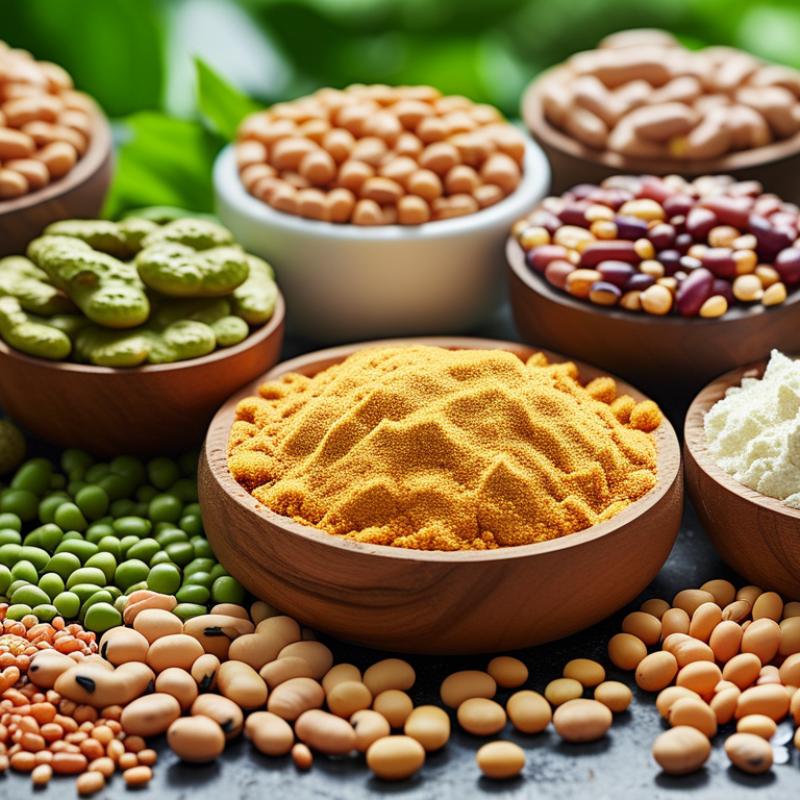
High-quality vegetal protein in China begins with the raw material, not attractive packaging. During supplier reviews, I examine the crop source, harvest records, and storage conditions. Soy, pea, rice, and wheat proteins each have different amino acid profiles. A serious evaluation should check digestibility, protein concentration, moisture, and amino acid balance. Laboratory results matter.
Processing quality is equally important. Gentle extraction can protect functionality and reduce unwanted flavors. Excessive heat may damage solubility or create a darker color. I also look for controlled microbiological testing, heavy metal screening, allergen management, and clear batch traceability. These details show whether quality is repeated or accidental. A clean label alone proves little.
Taste still decides consumer acceptance. A protein may perform well in a laboratory but fail in a drink, noodle, or nutrition bar. Test it in the intended product, at the actual dosage, and after normal storage. Texture, sediment, bitterness, and aftertaste should be recorded by trained evaluators. Some assessments remain subjective. That is worth admitting. Independent testing can reduce bias, while transparent corrective records reveal how a manufacturer handles problems. Certificates help, but they cannot replace factory visits, sample checks, and consistent data.
Quality evaluation of top vegetal protein in China should begin with nutritional evidence, not appearance. Measure protein content on a dry-matter basis, then verify amino acid distribution through laboratory testing. Digestibility matters too. DIAAS or a comparable method can show how efficiently the body uses essential amino acids. Check leucine, lysine, methionine, and tryptophan, because plant sources often have uneven profiles. Moisture, ash, fiber, and carbohydrate levels also affect real nutritional value. A high protein percentage can look impressive while masking poor digestibility.
Functional indicators decide whether the ingredient performs in food production. Test solubility at the intended pH, water-holding capacity, oil absorption, emulsification, foaming, and heat stability. Observe the powder after mixing. Does it disperse quickly, or leave sediment and small lumps? Sensory checks should cover bitterness, beany notes, color, and aftertaste. Results should come from defined methods, controlled batches, and independent verification where possible. One test is never enough. Excellent laboratory numbers may still perform poorly in a finished beverage.
Tips: Request a recent certificate of analysis and compare it with third-party results. Review allergen controls, microbiological limits, heavy-metal testing, traceability, and storage conditions. Ask whether values are measured before or after processing. Small changes in temperature or pH can affect performance. Do not ignore damaged packaging. It may indicate moisture exposure.
Quality testing for vegetal protein starts with amino-acid performance, not appearance. The FAO 2013 report recommends DIAAS, which measures ileal digestibility of indispensable amino acids. A DIAAS below 75 suggests limited protein quality. Scores from 75 to 99 are considered good, while 100 or above indicates excellent quality. Laboratories should test lysine, methionine, leucine, and other essential amino acids separately.
Digestibility needs controlled testing. Protein content alone can mislead buyers. Nitrogen-based methods may count non-protein nitrogen as protein. Accredited laboratories should combine validated nitrogen analysis with amino-acid profiling and digestibility data. Results should identify the method, sample condition, moisture basis, and laboratory uncertainty. Small details matter. Heat processing can improve digestibility, but excessive heating may reduce lysine availability.
Safety testing must examine microorganisms, heavy metals, pesticide residues, mycotoxins, and allergen cross-contact. The World Health Organization estimates that contaminated food causes about 600 million illnesses and 420,000 deaths globally each year. That figure shows why one final-product test is insufficient. Raw materials, processing water, equipment surfaces, and packaging also require monitoring. Traceability records should connect every result to a batch number. A clean certificate is not the whole story. Sampling can still miss uneven contamination. That weakness deserves honest review. Manufacturers should use risk-based sampling, independent laboratory verification, and periodic retesting against current regulatory limits.
How to Compare Chinese Vegetal Protein Suppliers and Products?
Comparing Chinese vegetal protein suppliers requires more than checking price or protein percentage. I review the raw material source, processing method, production capacity, and export experience. A reliable supplier should provide a recent certificate of analysis for each batch. Check protein content, moisture, microbiological results, heavy metals, and allergen information. Documents matter. But documents alone are not enough.
Request samples from several suppliers and test them under the same conditions. Compare solubility, color, odor, texture, and flavor after mixing. For example, a protein powder that dissolves quickly in cold water may perform better in beverages. Another may provide stronger texture in a plant-based food. Ask for traceability records, factory quality procedures, and sample retention policies. During supplier reviews, I also compare response speed and technical support. Small delays can reveal weak communication. Still, one factory visit does not prove long-term consistency.
Tips: Use the same test formula for every sample. Confirm whether laboratory methods are comparable. Ask for three production batches, not one. Review packaging strength, storage conditions, and shipping protection. Negotiate only after quality targets are written clearly. I have seen buyers focus too heavily on a low quotation, then discover unstable taste between batches. That mistake is easy to make. A practical scorecard can balance quality, documentation, capacity, communication, and total landed cost.
Typical commercial protein specifications for common vegetal protein ingredients. Values are expressed as minimum protein content on a dry-basis specification and should be verified with each supplier’s current COA.
For Chinese vegetal protein, certification should prove control, not decorate a sales file. The Good Food Institute reported global plant-based retail sales of 29.4 billion dollars in 2022. Growth increases the need for stronger verification. Check the factory’s valid SC food production license, HACCP system, and ISO 22000 or FSSC 22000 certificate. Confirm the certificate scope includes protein extraction, drying, and packing. A certificate can be current yet narrow.
Traceability should follow ISO 22005 principles and, where available, GS1-compatible batch records. Ask for the farm or supplier location, harvest date, processing line, allergen status, and shipment lot code. One sealed bag should connect to its laboratory results. Test reports should cover protein content, moisture, microbiological safety, heavy metals, pesticide residues, and unauthorized adulteration. Verify the laboratory’s accreditation, method, sampling date, and report number. Paperwork can mislead.
For organic or special-origin claims, verify the relevant Chinese certification code through an official registry. Do not accept a QR code as complete evidence. It should open records showing production, inspection, and distribution events. FAO estimates that 13.2% of food is lost before retail, making temperature, humidity, and storage records useful during transport. In practice, traceability often breaks between small suppliers and outsourced warehouses. That weakness deserves attention. A supplier refusing batch-level evidence should not receive a top-quality rating, even when the powder looks clean and dissolves quickly.
| Evaluation Dimension | What Should Be Verified | Relevant Certification, Standard or Test | Practical Verification Benchmark | Priority |
|---|---|---|---|---|
| Food safety management system | Confirm that the certificate is valid, covers the correct manufacturing site, and includes the relevant vegetal-protein product category. | ISO 22000:2018 or an equivalent internationally recognized food-safety management certification. | Check the certificate number, scope, issuing body, validity period, audit status, and manufacturing address. A certificate should not be accepted if the product or site is outside its stated scope. | High |
| HACCP and prerequisite programs | Review hazard analysis, critical control points, monitoring records, corrective actions, sanitation procedures, pest control, and employee hygiene controls. | HACCP principles described in Codex CXC 1-1969, General Principles of Food Hygiene, together with applicable Chinese food-production requirements. | Major hazards should be assessed for raw materials, soaking or extraction, heating, drying, storage, metal detection, packaging, and distribution. Critical limits must be measurable and supported by records. | High |
| China food-production compliance | Verify that the facility operates under the applicable Chinese food-production licensing and regulatory requirements. | Applicable provisions of GB 14881, General Standard for Food Production Hygiene; relevant product-specific national food-safety standards; and current licensing requirements. | Confirm that the production category, process, site, and permitted products match the supplied material. Review inspection records and recent regulatory nonconformities where available. | High |
| Traceability system | Test whether every lot can be traced backward to raw materials and forward to customers or finished-product shipments. | ISO 22005:2007, Traceability in the Feed and Food Chain — General Principles and Basic Requirements. | A supplier should be able to provide a documented lot code, raw-material batch, processing date, line or equipment identification, packaging records, laboratory results, warehouse movements, and dispatch information. | High |
| Raw-material origin and identity | Verify the botanical source, country or region of origin, crop or harvest information where applicable, supplier approval, and authenticity controls. | Supplier approval procedures, purchase specifications, identity testing, and documented chain-of-custody records. | At least one-step-back and one-step-forward traceability should be demonstrated through a mock recall. The raw material should match the declared source, such as soybean, pea, rice, wheat, fava bean, or another specified plant source. | High |
| Protein content and analytical accuracy | Compare the declared protein value with the product specification and independent laboratory results. | Use a validated nitrogen or direct-protein analytical method, such as the applicable ISO, AOAC, or Chinese national method for the specific matrix. | Do not rely only on a marketing claim. Verify the test method, nitrogen-to-protein conversion factor, sampling plan, moisture basis, laboratory competence, and agreed specification tolerance. | High |
| Microbiological safety | Evaluate total microbial count, yeast and mold, pathogens, and organisms relevant to the product form and processing environment. | Applicable Chinese national food-safety microbiological standards, product-specific limits, and validated laboratory methods. | Review results for each defined lot or according to a risk-based schedule. Testing should cover relevant hazards such as Salmonella and pathogenic Escherichia coli when applicable to the product and intended use. | High |
| Contaminants and residues | Check for heavy metals, mycotoxins, pesticide residues, prohibited substances, and process contaminants relevant to the crop and production method. | Current applicable Chinese maximum-limit standards, including GB 2762 for contaminants and GB 2763 for pesticide maximum residue limits, where applicable. | Risk-based testing should consider the crop, geographical origin, agricultural practices, storage conditions, extraction process, and concentration effects. Results should be linked to the tested lot. | High |
| Allergen and cross-contact control | Verify whether the ingredient contains or may contact recognized allergens, including soy, wheat or gluten-containing cereals, peanuts, tree nuts, milk, or other allergens relevant to the market. | Allergen control program and applicable Chinese labeling requirements, including GB 7718 and relevant product standards. | Review segregation, validated cleaning, rework controls, changeover records, allergen declarations, and analytical verification where risk assessment requires it. “Plant-based” does not automatically mean allergen-free. | High |
| Label and nutrition claim compliance | Check ingredient name, net content, production date, shelf life, storage conditions, allergen information, nutrition facts, and any protein or health-related claim. | GB 7718 for prepackaged-food labeling and GB 28050 for nutrition labeling, together with the current applicable product standard. | Declared protein, energy, fat, carbohydrate, sodium, and serving information should be supported by representative analytical data. Claims must not imply medical effects without a valid legal basis. | High |
| Processing aids and additives | Identify all additives, processing aids, carriers, enzymes, solvents, and cleaning chemicals that may affect the final ingredient. | GB 2760, the current Chinese national food-safety standard for the use of food additives, plus applicable product-specific requirements. | Request a complete formulation and processing-aid declaration, verify permitted use and maximum levels, and confirm that residues are controlled when required by the applicable standard. | High |
| Physical contamination prevention | Assess controls for metal, glass, stones, hard plastic, foreign fibers, and other physical hazards. | HACCP prerequisite programs, equipment inspection procedures, sieving or filtration records, and metal-detector or X-ray verification where installed. | Critical detection equipment should be challenged at defined frequencies. Records should show rejected-product handling, investigation, corrective action, and release authorization. | Medium |
| Moisture, water activity, and shelf stability | Verify moisture, water activity, packaging integrity, storage temperature, oxygen or humidity control, and shelf-life validation. | Product specification, validated shelf-life study, packaging-material specification, and applicable storage requirements. | Acceptance limits should be product-specific. The supplier should provide stability evidence that supports the stated shelf life under the declared transport and storage conditions. | Medium |
| Functional and sensory performance | Evaluate solubility, dispersibility, water absorption, emulsification, gelation, viscosity, color, odor, taste, and batch-to-batch consistency. | Approved product specification, validated internal methods, and agreed customer acceptance criteria. | Use a retained reference sample and test under defined conditions. Functional performance should be assessed separately from food-safety compliance because a safe ingredient may still fail application requirements. | Medium |
| Laboratory competence and certificates of analysis | Confirm whether testing is performed by a competent internal laboratory or an independent laboratory with appropriate accreditation. | ISO/IEC 17025 accreditation for relevant test methods, where available. | Each certificate of analysis should identify the product, lot, sampling date, test method, result, unit, specification limit, laboratory authorization, and reviewer. Generic or undated certificates should not be treated as lot release evidence. | High |
| Non-GMO or organic status, if claimed | Verify that voluntary claims are supported by a recognized certification or a documented identity-preservation and testing program. | Applicable Chinese organic certification rules or recognized non-GMO verification requirements, depending on the claim and destination market. | Review certified scope, raw-material segregation, mass balance, supplier declarations, purchase records, and test reports. Absence of a certification should not be interpreted as proof of GMO presence or absence. | Medium |
| Recall and incident management | Assess procedures for complaint handling, product withdrawal, recall, regulatory notification, root-cause analysis, and effectiveness checks. | Documented recall procedure aligned with the food-safety management system and applicable Chinese regulations. | Request evidence of a completed mock recall. The supplier should demonstrate the ability to identify affected lots, customers, quantities, distribution locations, and final disposition within a defined response time. | High |
| Audit and continuous improvement | Review internal audits, third-party audits, corrective-action reports, repeat findings, and management-review records. | ISO 22000 or equivalent management-system audit requirements; customer audit protocol where applicable. | Prefer suppliers that close corrective actions with root-cause evidence and effectiveness verification rather than merely providing short-term corrections. | Medium |
: Quality starts with crop source, harvest records, and storage conditions. Laboratory evidence matters. Check protein content, moisture, digestibility, amino acid balance, and contamination controls. Attractive packaging proves little.
Review protein content on a dry-matter basis. Check leucine, lysine, methionine, and tryptophan levels. Digestibility shows how efficiently the body uses essential amino acids. Also measure ash, fiber, moisture, and carbohydrates.
Gentle extraction can protect solubility and reduce unwanted flavors. Excessive heat may darken the powder or weaken performance. Ask for processing temperatures and batch records. The data may still be incomplete.
Test the protein at its intended dosage and pH. Measure solubility, water holding, oil absorption, emulsification, foaming, and heat stability. Look for lumps, sediment, or slow dispersion. A clear drink is a useful test.
Yes. Test the ingredient in the final beverage, noodle, or nutrition bar. Record bitterness, beany notes, color, texture, and aftertaste. Use trained evaluators and normal storage conditions. Some judgments remain subjective.
Review microbiological results, heavy-metal screening, pesticide testing, and allergen controls. Confirm the laboratory, test method, sampling date, and report number. One certificate is not enough. Independent testing can reduce bias.
Records should connect the farm or supplier to each sealed bag. Check harvest date, processing line, allergen status, shipment code, and laboratory results. Storage temperature and humidity records are also useful. Traceability can fail between suppliers and warehouses.
Confirm that required food production licenses and food-safety systems are current. Check whether their scope covers extraction, drying, and packing. Verify special-origin claims through an official registry. A QR code alone proves little.
Evaluating high-quality vegetal protein in China requires a balanced review of nutritional value, functional performance, safety, and supply reliability. The process should begin by checking protein content, amino acid balance, digestibility, moisture, solubility, and performance in applications such as beverages, nutrition products, and plant-based foods. Buyers should also assess flavor, color, texture, consistency between batches, and the raw material’s origin. A clear answer to “how to evaluate vegetal protein quality” should therefore include both laboratory data and practical application testing.
Safety verification is equally important. Products should be tested for contaminants, microbiological risks, allergens, heavy metals, and other relevant residues according to applicable standards. When comparing suppliers, consider production capacity, quality control systems, technical support, delivery reliability, and transparent documentation rather than price alone. Finally, verify recognized food-safety certifications, complete batch records, traceability from raw material to finished product, and effective complaint and recall procedures. These factors help buyers make informed, consistent, and responsible sourcing decisions.
